
I did 21 sales calls in one week. That was the problem, not the win.
ed.png)
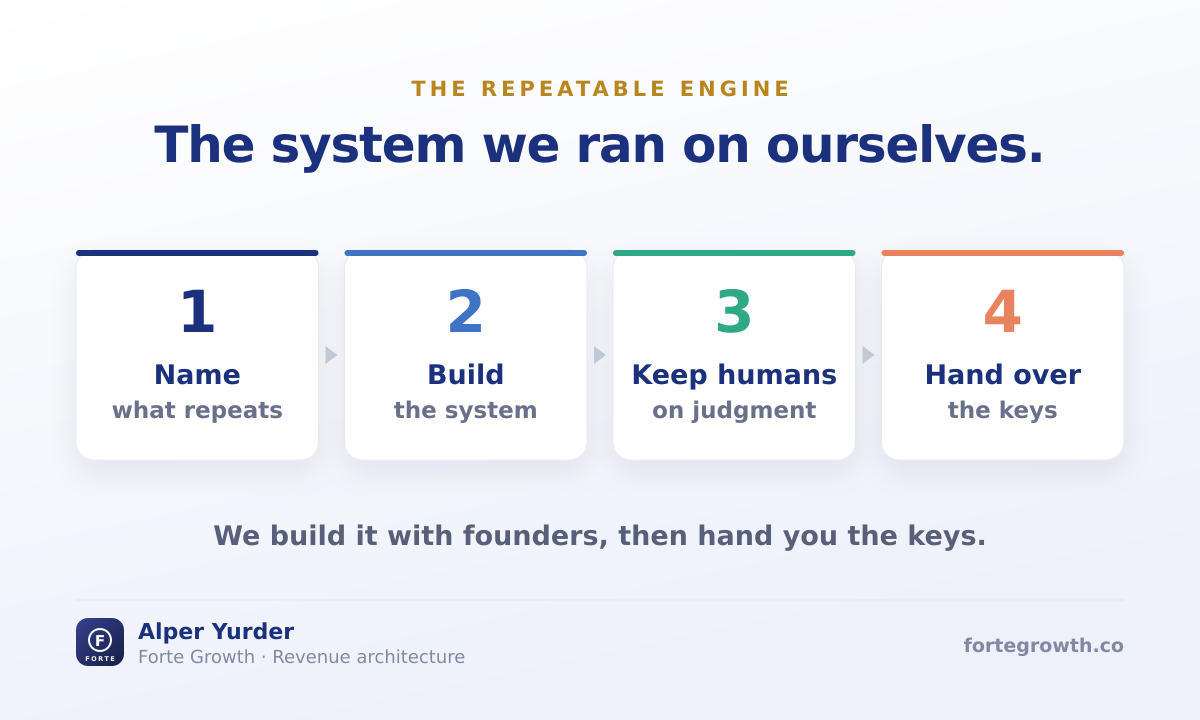
The bottleneck was me. So we spent the last month building the system that replaces me on everything except the part that actually needs a human.
I looked at my calendar a couple of weeks ago and counted 21 sales calls in five days. On paper that looks like a good week. It wasn’t.
Because those 21 calls sat on top of everything else. The content. The client comms. The list building. The copy review. The follow-ups. I was the person doing the selling and the person doing the delivery and the person chasing the admin between the two.
That is not a busy week. That is a broken system. And it is the exact thing I tell founders to fix.
So we fixed ours. Here is what we built, and how you can build the same.
First, the reframe: the answer is not “hire someone.”
When a founder is drowning, the instinct is to hire. Get an SDR. Get a marketer. Add hands.
I think that is usually the wrong first move. Because a new hire walks into a blank page. You pay exec money and six months of ramp for someone to build the system that should have existed before they arrived. I have watched founders hire the rep first and lose both the rep and the six months.
The repeatable work does not need another person. It needs a system. And in the last year the cost of building that system has collapsed.
So before we added anyone, we asked a narrower question: what do we actually do over and over that a machine could own?
What we actually did: name the four things, then build each one properly.
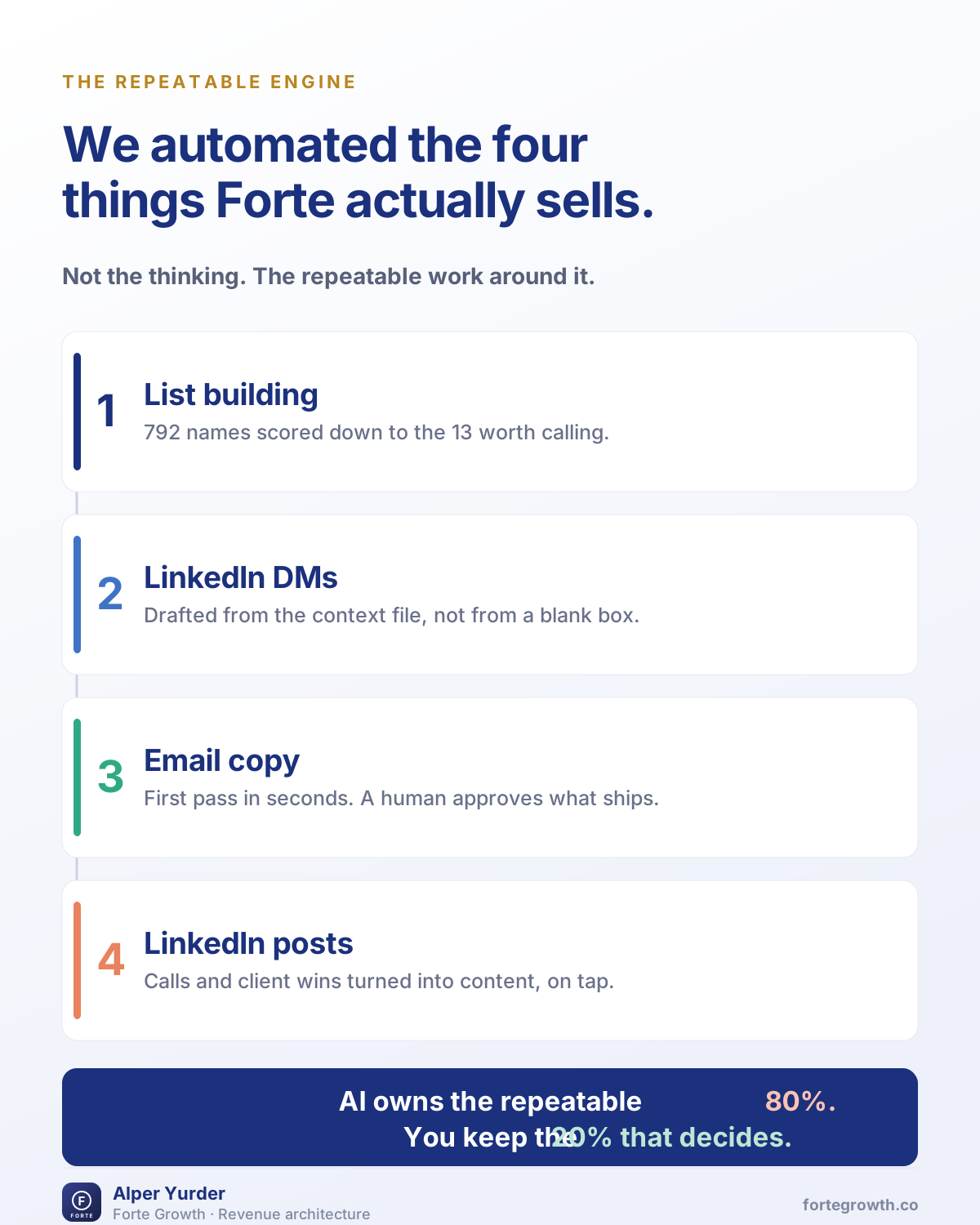
We stripped Forte down to what it repeatedly sells and delivers. Four things:
List building
LinkedIn DMs
Email copy
LinkedIn posts
Everything else is secondary. These four are the engine. So we are turning each one into a repeatable AI skill, not a one-off prompt we retype every time and hope for the best.
The difference between those two things is the whole point of this issue.
The distinction most people miss: skill versus context.
Most people use AI like a chat window. They open it, type a request, get something 70% right, fix it by hand, and start from zero the next day. That is not a system. That is a slot machine.
What we moved to is different, and it rests on two ideas:
A skill defines what. It is a fixed, reusable instruction for one job. “Turn this case study into a LinkedIn post.” “Build an outbound list against this ICP.” Written once, refined over time, run the same way every time.
A context file defines how. One central file holds everything that makes the output ours: the ICP, the positioning, the voice rules, the brand colours, the proof points. Every skill reads from it. So the output comes back on-brand and on-voice without us re-explaining who we are each time.
Skill plus context turns a probabilistic chat into something closer to deterministic. Same input, same standard, every run. That is the difference between a party trick and a process you can hand to someone else.
The proof: the job that used to eat half an SDR’s day.
Take list building. The old way was five tools and half a day. Apollo, then a scrape, then LinkedIn, then a spreadsheet, then cleanup.
Here is the run we did for our own outbound this month:
Fed our target criteria in and pulled an Apollo search: UK and Europe, Series A, the roles we serve.
Refined the filters down from 792 people to around 500 founders.
Handed that 500 to Claude, already trained on our own Notion docs, our ICP, our past client patterns.
It scored the list against who we actually close and complain least about, and returned 13 near-perfect founders and a secondary list of 66.
We launched to the 13.
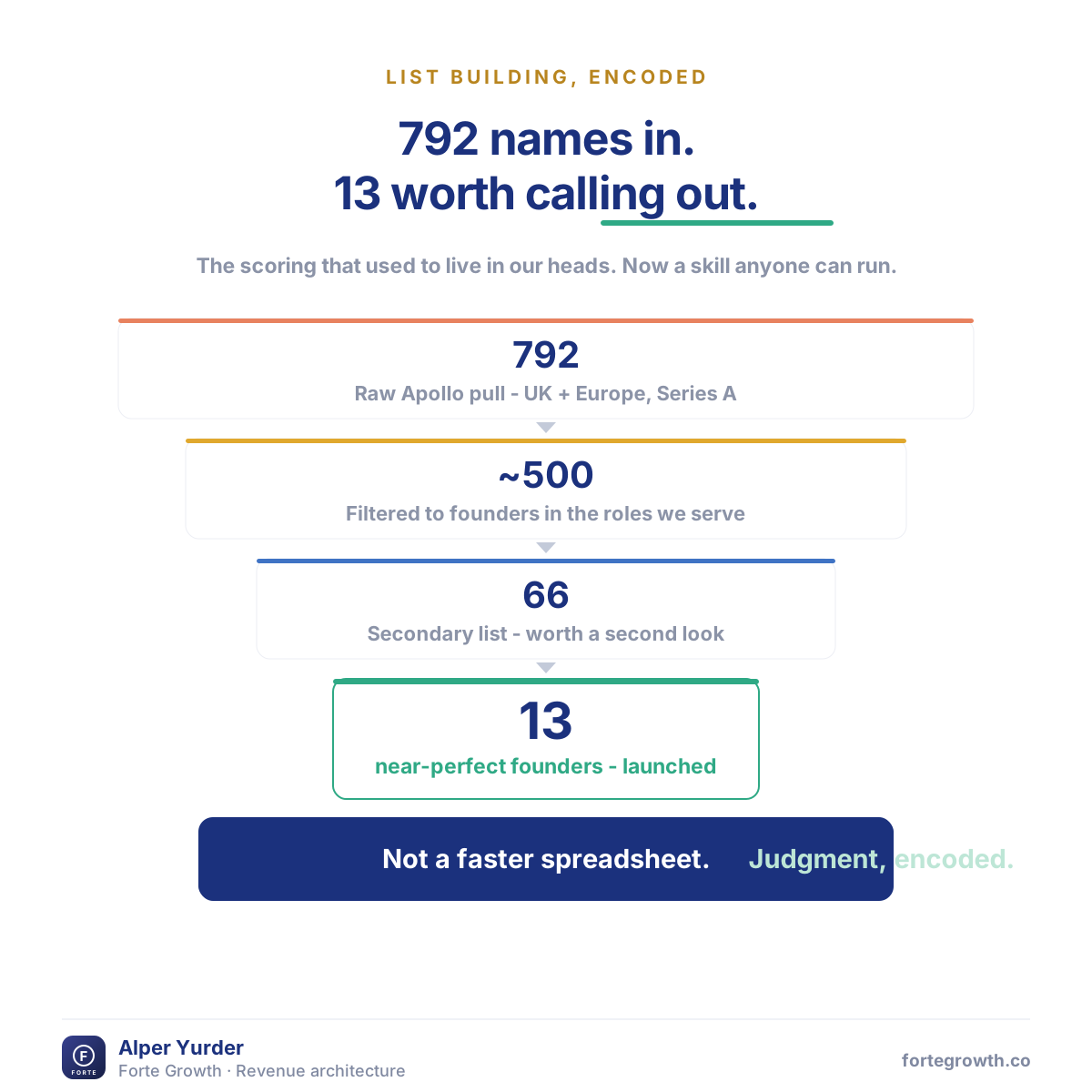
That is not a faster spreadsheet. That is judgment encoded. The scoring is the part that used to live only in my head and Boris’s head. Now it lives in a skill that anyone on the team can run and get the same answer.
And that judgment is not vague taste. When we read back three months of our own sales calls, the founders who actually activate and pay share a few hard signals: they are raising or have just raised, their inbound has quietly collapsed, or they tried an SDR or an outbound agency before and it did not land. That is what the skill scores for now. Not the job title. The moment.
And because we documented the whole process, the next person we bring on does not learn it by watching me for three months. They read the page and run the skill.
Why this matters: automate the drain, not the judgment.
I wrote something similar a couple of months ago and it holds: you should not automate the parts that require judgment. You should automate the parts that drain it.
The machine now owns the repeatable 80%. The list draft. The first copy pass. The post structure. The formatting and the admin between tools.
The human still owns the 20% that decides everything: the diagnosis on a client call, the positioning call, the judgment on whether a message is actually true and worth sending. Nobody wants an AI running their client relationships. That was never the goal.
The goal was to stop burning my best hours on work that a well-built skill can do to the same standard, so I can spend them where they compound. Better discovery. Sharper diagnosis. More of the right conversations.
The next drain in the queue: follow-up.
Here is the honest part. When we ran this diagnosis on ourselves, list building was not even our biggest leak. Follow-up was.
Read back three months of our own sales calls and the same commitment shows up after nearly every one: send the deck, record a short Loom, pull two or three testimonials, attach the one-pager. Every time, rebuilt by hand. And a couple of decisions where the prospect had given us a deadline sat waiting on a follow-up that quietly drifted.
The thing I diagnose in founders every week was live in our own pipeline.
So follow-up is the next skill. One post-call pack, assembled the same way every time, with a human still deciding what is actually true and what actually goes out. Same principle as the list. Name the drain, build the loop, keep the judgment on the human.
What we’re seeing in client work: this is the most common leak of all.
The reason I am comfortable writing about our own follow-up gap is that I see the same one in almost every founder I talk to. Read back a quarter of discovery calls and the pattern is hard to miss. A decision gets time-boxed - a call back by Friday, a choice before the board meeting, an answer ahead of a competitor’s pitch on Tuesday - and the follow-up that was meant to land first quietly slips.
The counter-intuitive part is who leaks worst. It is usually the founders who feel most on top of their pipeline, because the next step lives in their head, and their head is already full. That is not a discipline problem you can motivate your way out of. It is a missing system, and it stays invisible until you count the deals it costs you.
If that is you, it is one of the cheapest things to fix and the easiest to keep ignoring. Building that loop is a good part of what we do with founders in the first few months of working together.
If you want to build this yourself: here is roughly how.
You do not need Claude Code or a technical setup to start. You need the discipline of separating what from how.
1. Name your repeatable four. Look at what your team does every week that has a predictable shape. For most B2B teams it is close to ours: list building, outreach copy, content, follow-up. Pick the ones that hurt most.
2. Write the context file first. Before any automation, write down who you sell to, why they buy, your positioning, your voice, your proof. One document. This is the thing every prompt should reference. Most bad AI output is not a model problem. It is a context problem.
3. Turn each job into a fixed instruction. Instead of improvising a prompt each time, write the skill once: the task, the steps, and “refer to the context file for who we are.” Save it. Reuse it. Improve it when the output drifts.
4. Keep a human on the judgment step. Every workflow should have one point where a person makes the call the machine cannot: is this right, is this true, does this go out. Automate up to that line, not past it.
5. Document it as you go. The moment a workflow works, write it down. That document is what makes it scalable and trainable, and it is worth more than the automation itself.
Get one loop working. Run it for two weeks. Then build the next. Do not try to automate everything on day one.
The founder lesson underneath all of this.
The reason I could not hire my way out of that 21-call week is the same reason your next hire will struggle: there was no system for them to walk into.
That is the actual product. Not leads. A repeatable engine your team can run, and now increasingly one that AI can help run, so the founder is multiplied instead of maxed out.
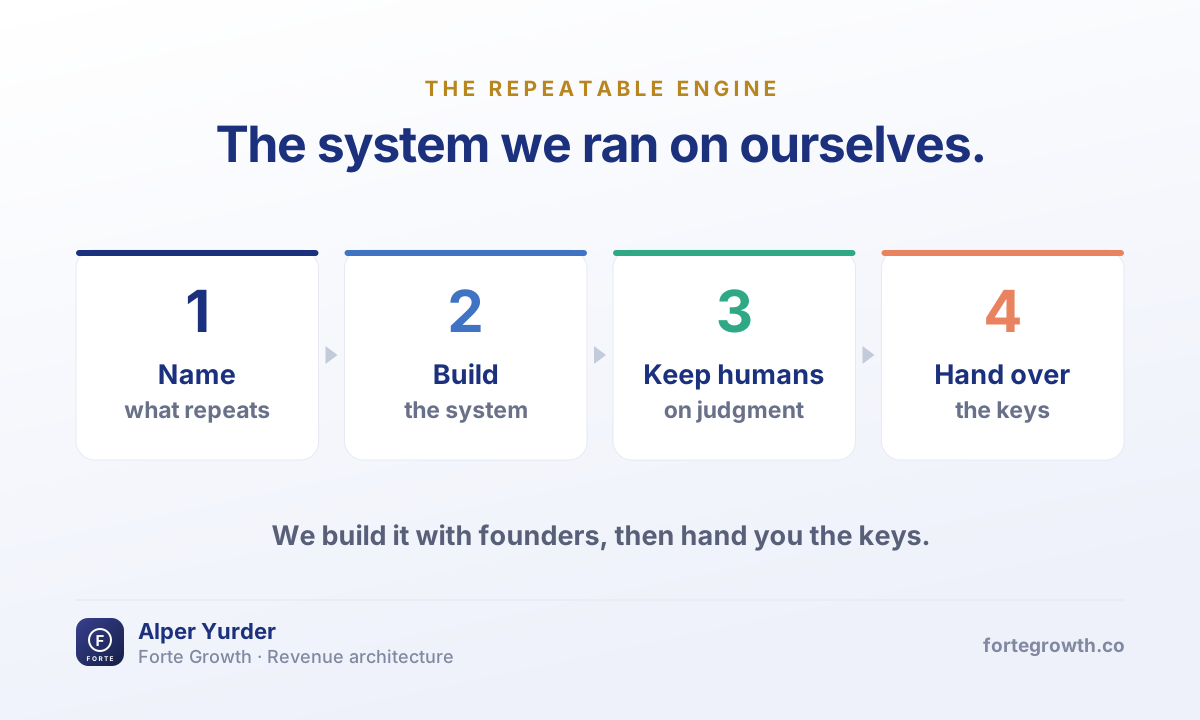
We build that engine with founders inside the first few months of working together. Same logic we just ran on ourselves: name what repeats, build the system, keep the humans on judgment, hand over the keys.
If this is useful
If you are the bottleneck in your own go-to-market - doing the selling and the delivery and the admin in between - that is the problem we solve.
👉 Book a 30-minute advisory call - no pitch, just a diagnostic of where your GTM actually stands and what the right next move is.
Not ready to talk yet? Start with the free resources:
GTM Diagnostic - 10 minutes to benchmark where you stand
From Early Traction to £1M ARR - the full 20-step system
All playbooks - everything in one place
Case studies - see the results before you commit
Ready to move forward
Talk to us about your GTM challenge and we'll recommend the right fit.