How do we take the founder out of every sales call without losing deals?
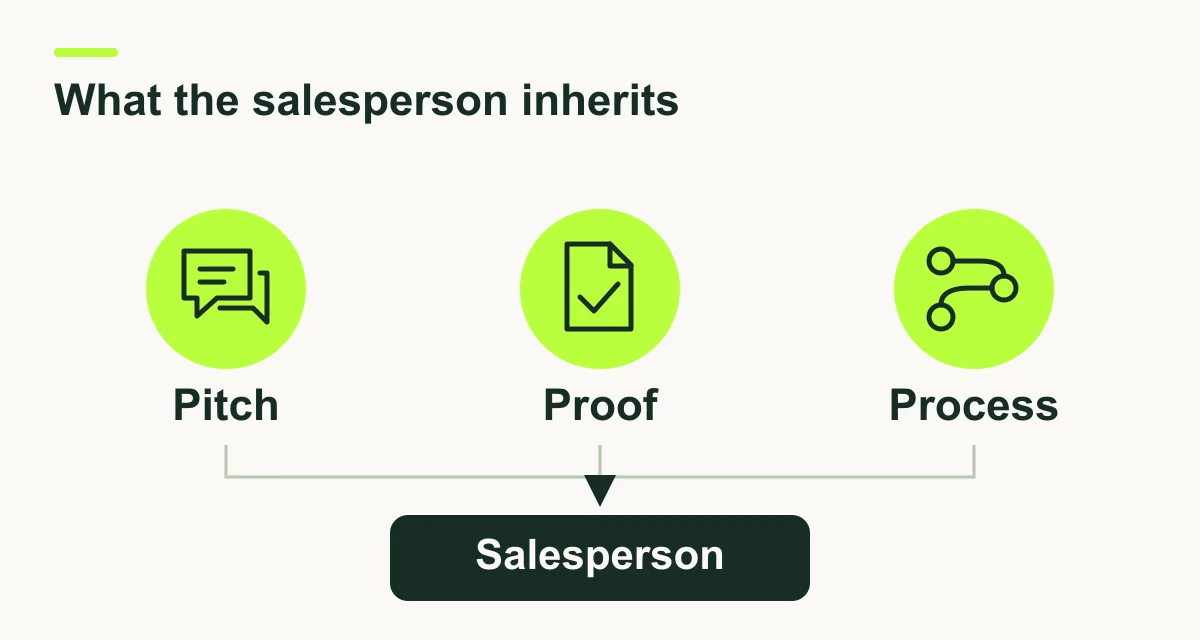
Write down how the founder sells, build proof that lets someone other than the founder close and put a sales process with follow-up behind every deal, then hand the calls to a salesperson who inherits all three. Forte Growth builds that system and runs it with your sales team.
Why do deals still depend on founder-led sales?
Usually one of three gaps. Forte Growth's 13 Symptoms of a Broken Pipeline lists them for a founder still selling past £500K to £1M: no documented playbook, no proof that lets anyone other than the founder close, or a first hire who did not fit.
What has to be written down before the founder steps back?
The pitch, the discovery questions, the objections and the steps of a deal: what counts as a deal, how one runs and who joins at each point. What only exists in the founder's head cannot be handed over.
Forte Growth's Founder Build System sets the order: document first, automate second, hire third, because a hire dropped into an undocumented motion has to invent the job before they can do it. "Should we hire an SDR?" and "How do we make lead generation repeatable?" cover the hire and the pipeline.
Where do deals leak once the founder steps back?
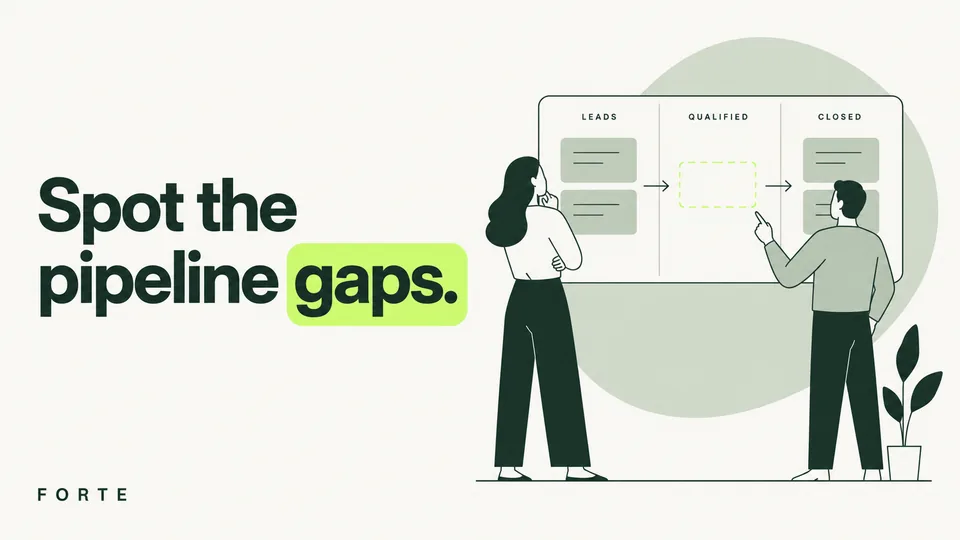
In follow-up, in deals that depend on a single champion inside the buyer and in an unclear value proposition: the three leaks Forte Growth's From Zero to GTM Engine: Founder-Led Sales & AI Playbook names, each worse as volume grows. Forte Growth's 13 Symptoms of a Broken Pipeline describes a weak sales process as one where the founder closes from gut, with no defined stages. Defined deal stages and follow-up that does not rely on memory stop opportunities dying quietly.
Who owns what once the founder steps back from sales calls?
| Who | Owns |
|---|---|
| The founder | The growth target, the offer, sign-off on anything published under their name, and visibility in the market |
| The salesperson | The sales calls and the deals, run from the written pitch, questions, objections and stages |
| Forte Growth | The system around them: outbound, content, CRM, follow-up and the playbook, kept current every week |
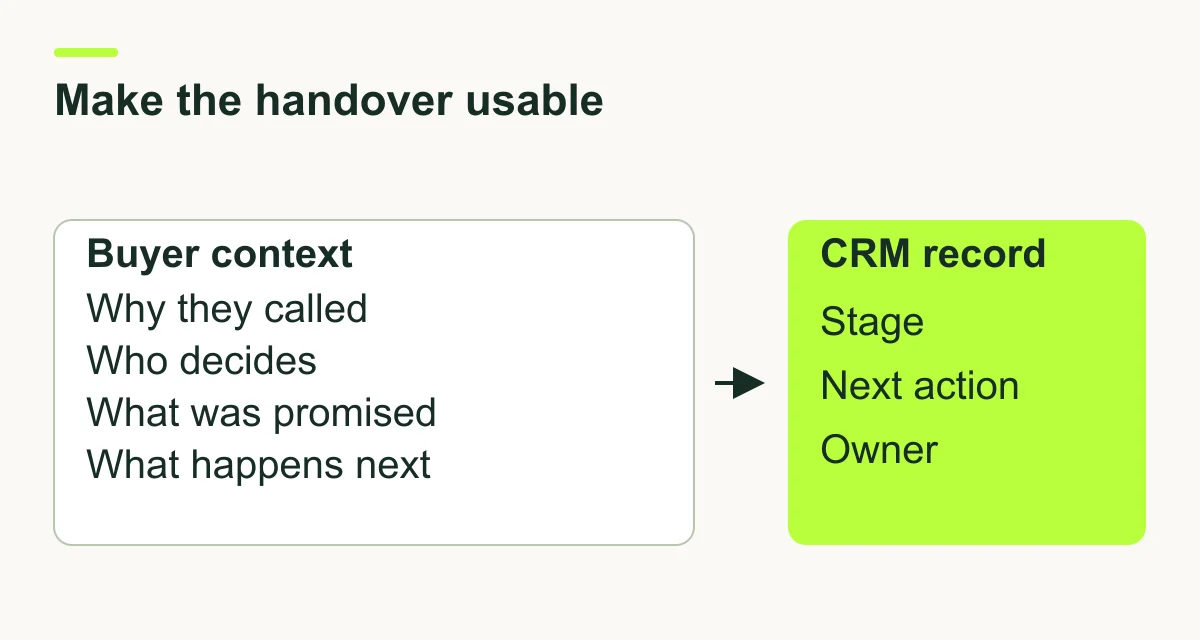
The handover has worked when deals move through the written stages to a close without the founder on the call, while buyers still see the founder in the market.
When should the founder join a sales call?
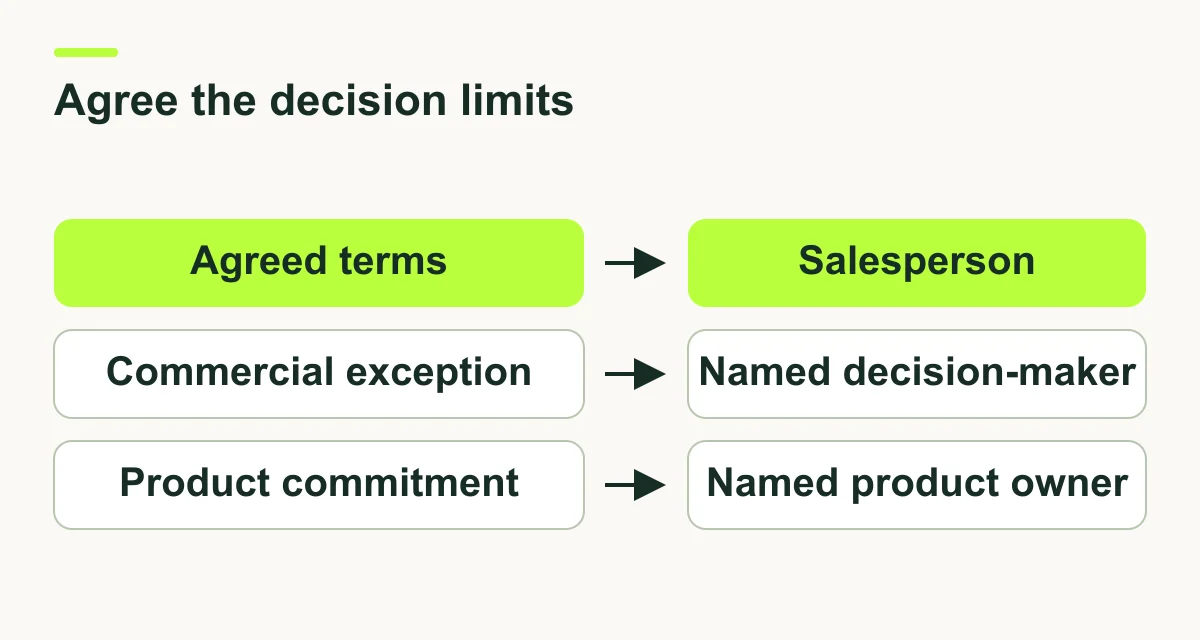
Agree the salesperson's decision limits before the next call. Write down which commercial terms they can approve and who decides on exceptions. Product commitments need an owner too; the founder may need a technical colleague to answer them.
Bring the founder in when the buyer needs a decision outside those limits. Tell them what needs deciding before they join, so they can address it without taking the deal back.
Afterwards, record why they joined. If the same exception keeps coming back, decide whether to change the salesperson's authority or the offer. If it was a familiar objection, improve the written answer. The founder should not have to answer it on every call.
Should the founder stop being visible to buyers?
No. Take the founder out of the call, not out of the market. Alper Yurder, founder of Forte Growth, co-founded Flowla and took it to £1M ARR with nothing spent on paid ads: founder authority was built before the sales call, and the founder brand became the primary lead source.
What does Forte Growth build and run?
Forte Growth builds and runs your go to market and marketing: outbound, content, CRM, follow-up, and the sales process and playbook your team sells from. It keeps improving it until it gets you results, with outbound live in week three.
In under 30 days from a standing start, the motion Forte Growth built and ran at Wyzr produced 17 booked calls and 53 interested leads, and its founder says it ran every week whether he was in it that day or not. At Wealt, where the founder still carried the whole commercial motion, Forte Growth installed the process and playbook the next commercial hire could run, and the sales motion became repeatable without founder involvement.
ALPER YURDER · FORTE GROWTH
Alper Yurder on moving from founder-led sales to a sales team, starting with the first playbook, with the full transcript.
What should we do first?
Take the diagnostic. Ten focused questions show where the commercial constraint sits and the best next move, with an instant result and no email gate.
Related playbook: The Founder Build System, how a founder-led company builds a go to market function that does not depend on the founder being in every deal.
Related case study: Wealt, a repeatable sales motion without founder involvement and £750K pipeline from 200 prospects.