 FORTE PLAYBOOK
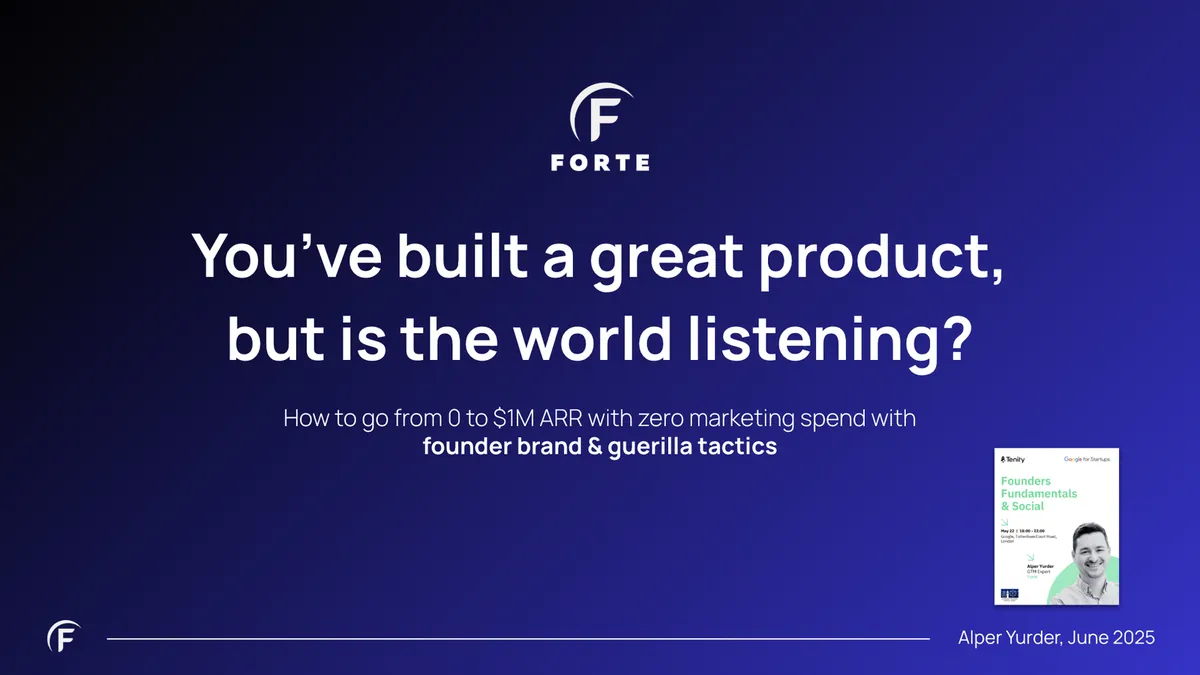
From Zero to $1M ARR with Founder Brand & Guerrilla GTM
A practical Zero to 1 playbook for early-stage B2B founders. Learn how to build trust, generate inbound, and close your first revenue without paid ads.
Read it here. Keep the PDF.
From Zero to $1M ARR with Founder Brand and Guerrilla GTM is Alper Yurder's workshop on making an unknown brand known: how a B2B startup gets to its first $1M ARR with no marketing spend, using founder brand and guerrilla tactics. It is for early-stage founders with a product that works and a market that has never heard of them.
The problem it solves is trust. A buyer has to trust a company before taking the meeting, and an unknown brand cannot buy that trust with an ad budget. The workshop builds trust in a set order: outbound to read buyer signals, then social proof, then a founder brand, then low-cost channels that do the job paid media would. The premise: making a brand known does not need millions. It needs a clear strategy, the right signals and activities that build trust at scale.
The groundwork: outbound, social proof and inbound
Outbound comes first because it is the fastest way to find out what the market cares about. The goal is message-market fit, not volume. Use it to read buyer signals, not to spam: start on LinkedIn and in conversations, use your audience's language, and keep batches to no more than 200 to 300.
Turn case studies, testimonials and launches into social proof. Some of those assets keep working after you publish them. Some are one-off pushes. You need both. Then map content to the top, middle and bottom of the funnel, so a buyer who looks you up finds proof at every stage. The From Zero to GTM Engine playbook covers each of these steps in full.
Why the founder brand comes first
People buy you before they buy your product. A founder's personal brand builds trust faster than company posts, and that is the unfair advantage an unknown company has. Nobody knows the logo yet. They can get to know the person.
The habit is simple. Share wins, failures and what happens behind the scenes, every week, so the brand stays human and relatable. Consistent sharing is what builds the audience.
Trust at scale without paid ads
The workshop rules out paid ads as the growth system and builds trust for free instead. Free in cash, that is. The deck names the real cost: podcasts, webinars, event series, influencer marketing and guerrilla marketing are all paid for with your own time and your own name.
What that looks like in practice:
- An influencer almanac. A guerrilla project that the influencers featured in it share for free.
- SEO that compounds. Blog views grow over a year, not over a week.
- Expert roundups and lead magnets. Content people download, which brings visitors back to the website every week.
- Podcasts, webinars and event series. Formats that put the founder in front of the same audience again and again.
They need little budget. They need the founder to keep showing up.
What it looked like at Flowla
The founder brand slide is the personal one. Posting on LinkedIn feels cringe at first. It stops feeling that way when inbound leads come in.
Flowla, which Alper co-founded, is the worked example. The deck puts its early revenue down to founder brand, non-scalable tactics and a mix of outbound and virality, with no paid ads. Flowla went on to reach £1M ARR with £0 spent on paid ads, and raised £1.5M.
Related playbook. For the step-by-step version, read One Million ARR in 20 Steps.
Questions founders ask
Can a B2B startup really reach its first million in ARR without paid ads?
Flowla did: £1M ARR with £0 on paid ads. The cost does not disappear, it moves. Instead of an ad budget, you spend founder time on content, conversations, events and guerrilla projects.
What counts as guerrilla marketing for a B2B company?
Low-cash, high-effort projects that earn attention through people who already have an audience: an influencer almanac, expert roundups, lead magnets, podcasts, webinars and event series.
What if the founder does not want to post on LinkedIn?
That is normal at the start, and the deck says so. It is still the route to trust an unknown company has, because a founder's brand builds trust faster than company posts. Post weekly, share what actually happened, and let the first inbound leads settle the argument.