We're going to a conference next month. How do we get meetings out of it?
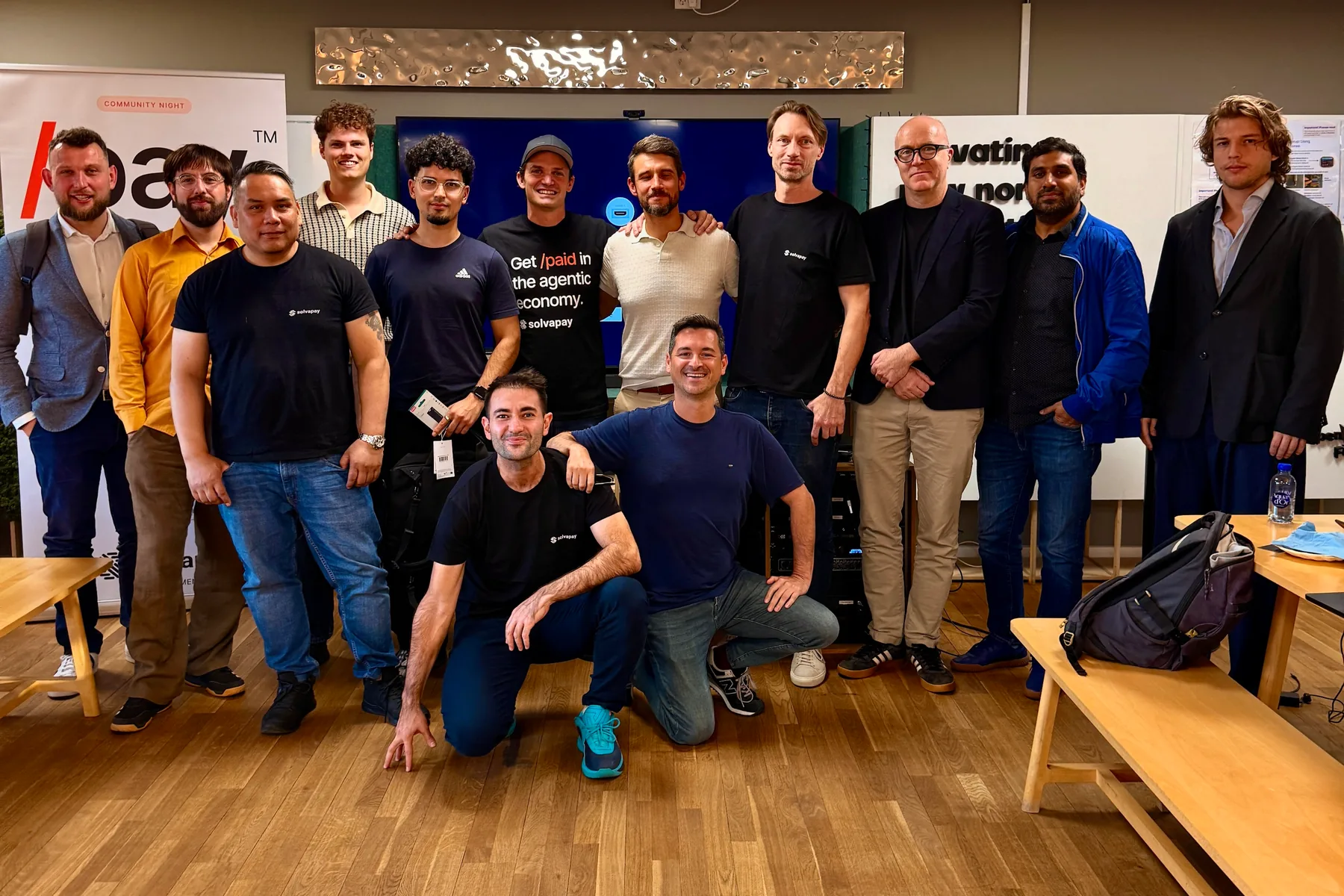
Contact the attendee list before you go. Forte Growth ran this for SolvaPay ahead of Nordic Fintech Week in September 2026: 154 attendees contacted in the week before the doors opened, 85 replies, 30 meetings booked before anyone landed in Copenhagen. The event is where you hold the meetings. It is not where you find them.
| Question | Answer |
|---|---|
| When do we start? | Eight to twelve weeks out is what the best programmes do. Four days out still worked for SolvaPay |
| Where does the list come from? | The event app directory, then sponsors, speakers, the LinkedIn event page |
| How many people do we contact? | Only ICP and investor matches. 154 out of a full directory, in the SolvaPay case |
| What do we send? | Two or three emails. One line of personalisation, specific dates offered, a second person from your team |
| What should we expect? | 15 to 25% of a confirmed-attendee list booked, with disciplined follow-up. 5 to 10% with average execution |
| How do we measure it? | Meetings held and pipeline created, against the stand, travel and salaried days |
Why do most event budgets produce nothing?
Because the plan is to turn up. A stand, flights, hotels and three people off the desk for a week is a five-figure commitment, and the return is left to whoever happens to walk past.
The people you wanted to meet were in the same building. They just had a full calendar by Tuesday morning, because somebody else wrote to them first.
Forte Growth's position on this is that the fix is not a better stand or more branded socks. It is a list and a fortnight of messages.
The spend usually sits in the wrong place. The operator Andrine Mendez splits the work that produces event ROI roughly 40 percent pre-event, 20 percent at the show and 40 percent in post-event follow-up. Most budgets invert that, putting the largest line into booth space and leaving the outreach and the follow-up to whoever has a spare afternoon.
How far in advance should we contact conference attendees?
Earlier than you are going to. The highest-performing programmes run an eight to twelve week cadence, and Vendelux's 2026 B2B Events Survey found that 55 percent of teams do not start until inside four weeks.
The reason is simple. The senior attendees, the investors and the buyers get booked out first, and they get booked by whoever reached them earliest. Every day you wait, a larger share of your list is already committed.
Late is not the same as pointless, though, and Forte Growth has the numbers on that. The SolvaPay campaign for Nordic Fintech Week 2026 started sending on 19 September for an event opening on the 23rd. Four days. It still returned a 29 percent reply rate from 134 people contacted by email, because the list was tight and the ask was small.
So the honest rule has two halves. Plan for eight to twelve weeks, because that is what the best-run programmes do and it is the version that scales across a year of events. But if the event is a fortnight away and nothing has gone out, send anyway. The worst outcome is the one where you land with an empty calendar because two weeks did not feel like enough time to bother.
How do we find out who is attending a conference?
Four sources, in order of how good the data is.
The event app. Brella, Swapcard and the rest publish a searchable attendee directory to everyone holding a ticket, with job titles and company names. That is the whole list, and it can be pulled into a spreadsheet.
The exhibitor and sponsor pages. Public, on the event website, available before you have even bought a ticket.
The speaker list. Small, high value, and every one of them is reachable on LinkedIn.
The LinkedIn event page. Most conferences have one, and the attendee list on it is visible.
Getting the app directory into a usable sheet is the one step that takes real work. Browser scraper extensions handle some apps. Others need a short script: when Forte Growth pulled the Bits & Pretzels directory in September 2026, it took roughly 290 lines of JavaScript to get a clean export. Budget an afternoon for it once, and everything after that runs on the output.
How many of the attendees should we contact?
Only the ones who match your ICP or your raise. Not the whole directory.
A mid-size conference lists two to five thousand attendees. Emailing all of them is spam, it burns your sending domain, and it fills your calendar with meetings you did not want. For SolvaPay at Nordic Fintech Week 2026, Forte Growth cut the full app directory down to 154 people who were either a genuine customer fit or an investor worth thirty minutes. Every one of those 154 had a line next to their name explaining why they were on the list.
If you cannot write that line, take them off.
Should we use email, LinkedIn or the event app?
All three, picked per person by what you actually have on them.
Email carries the volume when you have a work address. For SolvaPay at Nordic Fintech Week 2026, 134 of the 154 people went by email, and that leg returned a 29 percent reply rate. The remainder went through the Brella event app and LinkedIn, because no reliable address existed for them and a guessed one is worse than no message at all.
The event app has a structural advantage worth using even when you do have the email. Attendees opted into being contacted there, so a message is expected rather than tolerated, and the built-in booking tool drops an accepted meeting into both calendars without a scheduling thread. LinkedIn is the fallback for anyone who never activated their app profile.
The practical rule Forte Growth applies: email where there is a verified address, the app where there is not, LinkedIn where there is neither. One message per person per channel. Contacting the same person in all three at once is how you turn a warm list cold.
What do we send conference attendees?
The event is the reason for the message, so use it. “I saw you're going to X” is a real trigger, and that is what makes event outreach work several times better than ordinary cold email.
Keep the personalisation to one line: the reason that person is on your list. Ask for a specific slot rather than “would you like to meet”, because a proposed time is a decision and an open question is a chore. If the event app has its own booking tool, use it. An accepted request lands in both calendars without anyone typing an email address.
Then send a sequence, not one message. The SolvaPay campaign Forte Growth ran for Nordic Fintech Week 2026 was two emails a day apart, and the second one was doing real work. One email and silence is not a no, it is an inbox.
What did the actual emails say?
Two emails, sent a day apart. This is the exact copy Forte Growth sent for SolvaPay at Nordic Fintech Week 2026, on the email leg of the campaign that returned a 29 percent reply rate.
Email one. Subject: You're at Nordic Fintech Week too
Hey {first_name}, saw you're going to be in Copenhagen for Nordic Fintech Week.
Viggo here, founder of SolvaPay, building payment infrastructure for AI. We make your business payable inside AI. Payable by agents in Claude, ChatGPT, GrokBot and more.
I'm on the agentic commerce panel on Thursday the 24th at 13:25, and we're in the startup area.
Would be really fun to meet while we're both there. Up for a coffee, or a walk and talk?
Viggo Stenseth, Founder, SolvaPay
Four things are carrying that email.
The subject line is the shared fact and nothing else. It is true, it is specific to the reader, and it is the only reason a stranger opens a message from someone they have never heard of.
The introduction is one sentence. Who is writing, what the company does, in plain words. No paragraph about the mission.
The panel time and the stand location are proof of presence. They tell the reader this person is genuinely going, which is the line between event outreach and ordinary cold email.
The ask is small. A coffee or a walk, not a thirty-minute demo.
Email two, sent the next day. Subject: Wednesday or Thursday?
Before the week turns into a blur. I've got slots on the 23rd and the 24th, and Ingemar, our CTO, is there both days if my times don't work.
If your week is already stacked, we can do it properly the week after instead.
Which is better?
This one does not recap the first email. It picks up mid-conversation, which is how a real follow-up reads.
It names two dates and offers a second person, so a yes does not depend on one diary. It gives an exit that is still a meeting: if the week is full, take the week after. And it closes on a question with two answers, both of which are a yes.
Notice what is in neither email. No attachment, no calendar link, no case study, no pricing, no paragraph about why the reader should care about the category. Two short emails and a specific ask.
How many meetings should we expect from an event list?
Between 15 and 25 percent of a confirmed-attendee list, if the follow-up is disciplined. Between 5 and 10 percent if it is not.
Those are Vendelux's published bands, and the gap between them is the entire return on the show. Event lists sit far above ordinary cold outbound, because you share a date, a place and a reason to talk.
The SolvaPay campaign Forte Growth ran for Nordic Fintech Week 2026 landed at the top of the disciplined band: 30 meetings against 154 people contacted, a shade under 20 percent, with a 29 percent reply rate on the email leg. That is a good result rather than a freakish one, which is the point. It is reproducible, because it is what the method produces when the list is qualified properly.
What it is not is a floor. The same method on a badly matched event, or with a list nobody qualified, lands in the 5 to 10 percent band or below. The variable is the list, not the copy.
One more number worth knowing before you count booked meetings as won. Vendelux puts pre-booked meetings converting to qualified opportunities at 25 to 40 percent, against 15 to 25 percent for conversations picked up at the stand. A booked meeting is worth up to twice a floor conversation, because the person arrived intending to talk to you.
What happens at the stand once the outreach has gone out?
People arrive already knowing who you are.
The effect nobody plans for is the walk-ups. At Nordic Fintech Week 2026, SolvaPay had attendees come to the stand and open with “you wrote to me” or “I got an email from your CEO”. Those are conversations that would not otherwise have happened, from people who never replied to the message.
Booth traffic is a function of how many people recognise your name when they walk past it. That gets decided in the two weeks before the event, not during it.
How do you calculate event ROI?
Add up the real cost, then count meetings held and pipeline created against it. Do the sum before you go, not after.
The real cost is the stand, the travel, the hotels, the collateral and the salaried days of everyone who went. That last line is usually the largest and it is usually the one left out.
Then track five numbers: people contacted, replies, meetings booked, meetings actually held, and pipeline value from those meetings. The fifth lands weeks later. An event with 30 booked meetings and a £20,000 average deal size has a defensible case long before anything closes. An event with a busy stand and no booked meetings does not, whatever the badge scanner says.
Write the target down before you buy the ticket. “We need eight qualified conversations to justify this” is a decision. “It was a good event” is not.
What if the event has no attendee app?
Use the speaker list, the sponsor list and the LinkedIn event page instead. Smaller list, same method.
Every conference publishes its speakers and sponsors, and those are the highest-value names in the building. Most have a LinkedIn event page whose attendee list is visible to anyone following it. The event hashtag in the fortnight beforehand surfaces the people actively looking for conversations.
The list will be 40 names rather than 400. Forty people contacted properly beats four hundred badge scans.
What does Forte Growth do around events?
Forte Growth builds and runs the whole sequence: the attendee list, the qualification, the copy, the sending and the follow-up, so the client's team arrives with a calendar instead of a plan to network.
Event outreach is one part of a 30-step lead generation process. Writing the copy is one of those steps. The list is the one that decides the result.
Forte Growth builds the same marketing function an in-house team of five would give you, at roughly £250,000 a year, as a system in three months: build it, run it, hand it over, across more than 60 deliverables.
Recent event work: SolvaPay at Nordic Fintech Week 2026, 30 meetings from 154 people contacted. The Tenity delegation at Bits & Pretzels 2026, where every company in the delegation received a named list of customers and investors to meet in Munich, with the messages written for them.
If you have an event on the calendar and no plan beyond attending, book a call.
Common questions
Is exhibiting at a conference worth it?
Only if you contact the attendee list beforehand. A stand with no pre-booked meetings is a five-figure bet on footfall. A stand with 30 meetings already in the calendar pays for itself before the doors open. Forte Growth's position is that the stand is a venue for meetings you have already booked, not a lead source in itself.
Which channel works best for event outreach?
Email carries the volume where you hold a verified work address. Forte Growth sent 134 of SolvaPay's 154 Nordic Fintech Week contacts by email, for a 29 percent reply rate on that leg, and reached the rest through the Brella event app and LinkedIn. The event app is worth using even when you have the email, because attendees opted into being contacted there and its booking tool writes to both calendars. Do not contact the same person on all three at once.
Can we email conference attendees who have not opted in?
In the UK and EU this normally runs on legitimate interest for business-to-business contacts at corporate addresses, which requires a genuine relevance to that person's role, a clear identification of who you are and a working opt-out on every message. Relevance is the part that matters legally and commercially. A list where every name has a written reason for being there is both a better campaign and a better defence. Take your own legal advice on your specific list.
How many messages should we send each attendee?
Two or three. The SolvaPay campaign Forte Growth ran for Nordic Fintech Week 2026 used two emails sent a day apart and stopped there, because the event date was the deadline. Where there is more runway before the event, a third is worth sending. Stop at three.
What if we are attending rather than exhibiting?
The method is identical and the economics are better, because your cost base is a ticket and a flight rather than a stand. Attendees with 15 booked meetings routinely get more out of an event than sponsors with none.
How long does the whole thing take to set up?
An afternoon to pull and qualify the list, a day to write the sequence, then two weeks of sending. Forte Growth runs this inside its normal delivery rather than as a separate project.
Sources
The benchmark figures on this page come from published operator data rather than from Forte Growth's own book, and they are cited so you can check them.
- Vendelux, B2B Event Marketing Benchmarks: The Operator's Reference. Meeting-booking bands of 15 to 25 percent for a confirmed segment with disciplined execution and 5 to 10 percent with average execution, and meeting-to-opportunity conversion of 25 to 40 percent for pre-booked meetings against 15 to 25 percent for booth conversations.
- Vendelux, Event Marketing Statistics 2026, from its 2026 B2B Events Survey. The eight to twelve week cadence of the highest-performing programmes, the finding that 55 percent of teams start inside four weeks, and the 70 percent of teams who name lack of attendee-list visibility as their top barrier.
- Andrine Mendez, B2B Event Marketing ROI: A Framework for Every Scenario, July 2026. The 40-20-40 split of event ROI across pre-event, on-site and post-event work, which she presents as her own working rule.
- Center for Exhibition Industry Research. The industry body for exhibition data, and the original source behind most of the trade-show statistics that circulate without attribution. Its reports are paywalled, which is precisely why the recycled versions are worth treating carefully.
- CEIR via Pittcon, How Exhibitors Can Improve Lead Quality and Sales Conversion. CEIR's 2015 study on exhibitor ROI found that exhibitors who qualify leads against stated criteria see roughly 39 percent of them turn out qualified. The figure is from 2015 and is cited as such.
A note on the wider literature. A large share of what ranks for “trade show statistics” is unsourced, recycled between vendor blogs, and in some cases traceable to CEIR studies from the 2010s presented as current. The figures above are the ones Forte Growth was able to trace to a named methodology. Where a number could not be traced, it is not on this page.
Related reading from Forte Growth:Our outbound has stopped working. What do we fix first? · Which segment should we go after first? · How to build prospect lists that actually convert · What does an in-house marketing team actually cost per year in the UK?
Last reviewed September 2026.